Cold Kitchen, Clean Cup: Dialling In V60 Through a Damp UK Winter
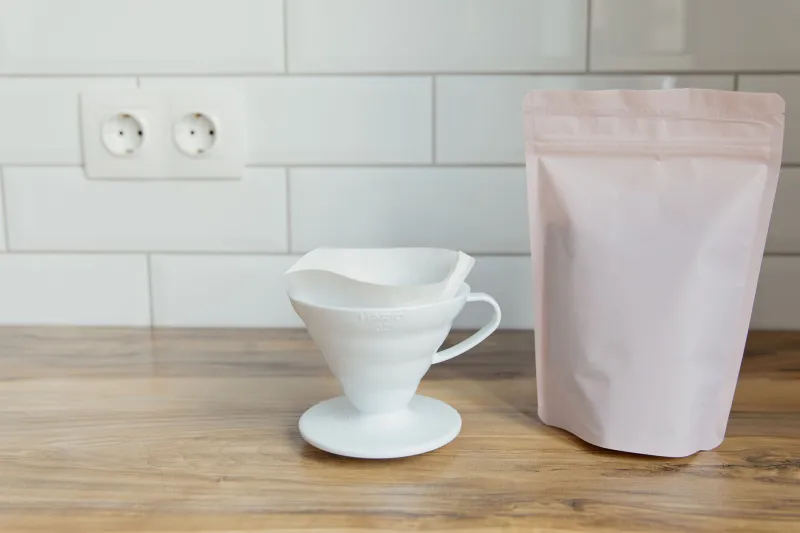
November in the UK has a certain smell: damp coats, radiator dust, the last of the autumn leaves going soft on the pavement. It also has a certain effect on pour-over. The V60 that tasted clean and sweet in September suddenly seems thin, sour or oddly muddy. You have not changed the beans. You have not changed the recipe. The kitchen has changed around you.
This is not imagination. A cold, damp, dim room changes how coffee brews. It changes how fast the slurry cools, how your kettle behaves, how static clings to ground coffee and how accurately you pour when the light is poor. The good news is that you do not need a new setup. You need a few small adjustments and a bit of patience.
Why a cold, damp kitchen changes the brew
Pour-over is a heat-sensitive process. When the room is cold, the brewer, the cup and the air around the slurry all pull warmth out of the brew. A V60 that normally finishes at a comfortable pace can drop temperature faster than expected. Lower temperature in the slurry can mean less extraction, which often shows up as sourness or a thin, tea-like body.
Humidity matters too. Damp air can affect how coffee grounds behave, especially if beans are stored in a open bag or a loose container. Static can make grounds cling and clump. Water chemistry is the other variable. UK tap water varies enormously, from soft northern supplies to hard southern water. If your kettle is scaled or your filter is old, the cup can taste flat or chalky no matter how good the beans are.
And then there is light. This sounds trivial until you try to pour a precise 250g in a dim kitchen at 7am. Poor lighting makes it harder to see the bed, the drawdown and the scale. You end up pouring by guesswork, which is exactly how you get an uneven cup.
A flexible winter V60 recipe
Start with a simple recipe and adjust from there. This is for one cup, around 250g of brewed coffee.
- 15g coffee, ground medium-fine
- 250g water, around 94°C
- V60 with a rinsed paper filter
- A preheated brewer, server and cup
The preheat is not optional in winter. Fill the V60 and server with hot water, let them sit while you grind, then empty and add the coffee. A cold ceramic brewer will steal heat from the first pour.
Add the grounds, level the bed and start your timer. Bloom with 45g of water, gently swirl or stir once, and wait until 45 seconds. Pour in stages: go to 140g by around 1:15, then to 250g by around 2:00. Keep the water level steady and avoid pouring directly down the centre. The drawdown should finish somewhere between 2:45 and 3:15. If it is much faster, the grind may be too coarse. If it stalls, it may be too fine or you may be agitating too much.
In a cold kitchen, try water at 94°C rather than 92°C, and preheat more thoroughly than you would in summer. If the cup still tastes sour, grind a touch finer before you reach for hotter water. If it tastes bitter or muddy, go slightly coarser and pour more gently.
Troubleshooting the grey-day cup
Sour, thin or sharp: This usually points to under-extraction. Preheat the brewer and cup, raise the water temperature by one degree, grind a little finer, and make sure your bloom is long enough. If the drawdown is very fast, the water is running through the coffee before it can do its job.
Muddy, bitter or drying: This can be over-extraction, but it can also be too many fines in the grind or too much agitation. Try a slightly coarser grind, pour more gently and avoid stirring the bed after the bloom. Check that your grinder is not producing a lot of dust.
Stalled drawdown: If the water sits on top of the bed, the grind is probably too fine or the filter is clogged with fines. Coarsen the grind, reduce agitation and check that you are using a fresh, properly rinsed filter. In humid weather, beans can also behave differently, so give the grinder a small adjustment rather than a big one.
Flat or chalky: Think water. If your kettle is scaled, descale it. If you use a filter jug, change the filter. If your tap water is very hard, try a low-mineral bottled water or a simple water filter. Small changes in water chemistry can make a bigger difference than a new dripper.
Simple gear checks for dim mornings
You do not need a laboratory. You need a few reliable basics. Check that your kettle holds temperature reasonably well; a kettle that drops fast in a cold kitchen will make your recipe inconsistent. Keep your scale where you can see it, and if the kitchen light is poor, use a small lamp or even your phone torch at the counter. It sounds fussy, but being able to see the bed and the scale makes you a more consistent brewer.
Store beans in an airtight container, not a folded bag on a damp windowsill. Give the grinder a quick brush to stop old grounds and static building up. Rinse the filter with hot water, not just warm. And keep a cloth handy: in a cold kitchen, condensation and spills make everything feel more chaotic than it needs to be.
A small ritual for a dull day
Winter pour-over does not need to be perfect. It needs to be repeatable. Preheating, a slightly finer grind, a little more heat and a gentle pour will get you most of the way there. The rest is attention. Listen to the kettle, watch the bed, smell the bloom. A grey morning is not the enemy of a good cup. It is just another set of conditions to brew through.