What Four Pounds Actually Buys: Judging Value on a UK Café Menu in 2026
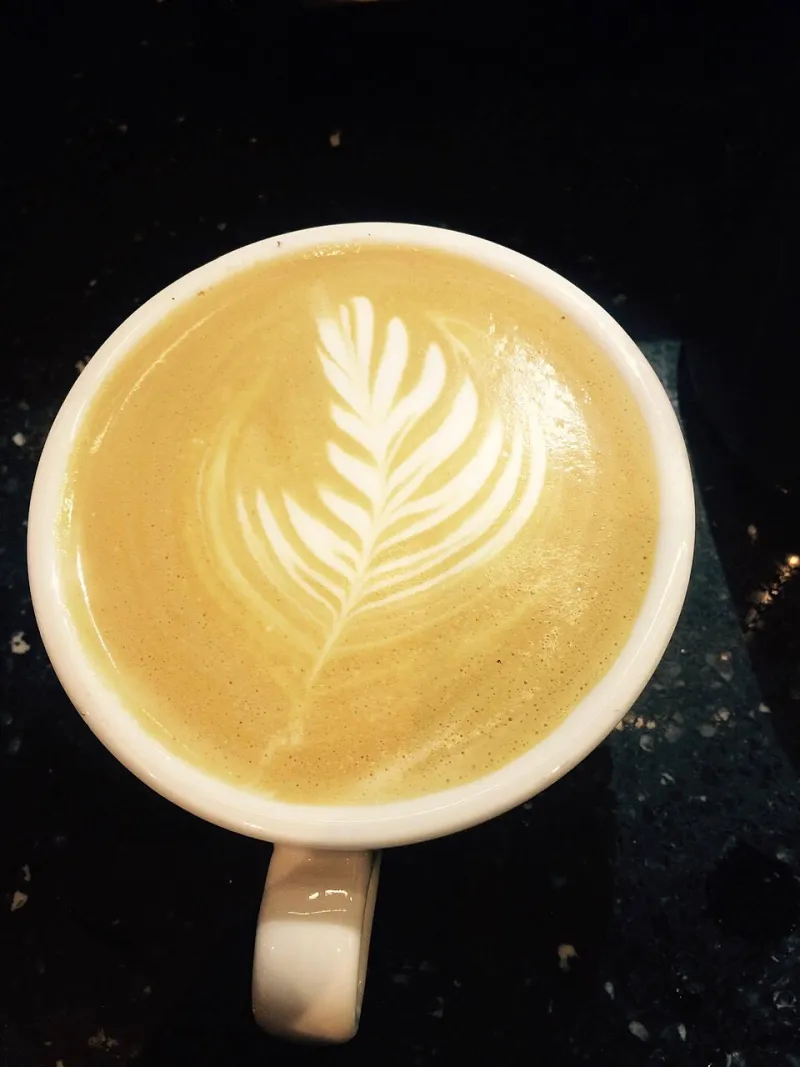
Photo: GeorgeMichaelFarewell, CC BY-SA 4.0, via Wikimedia Commons
Somewhere over the past few years, the price of a flat white in a UK café drifted past four pounds, and the internet decided this was a scandal. Comment sections filled up. Someone compared it to a pint. Someone else pointed out that a pint is £6 now, which rather ended the argument.
The truth is messier than either side admits. Four pounds is entirely reasonable for a well-made coffee in a well-run café — and four pounds is also a lot to pay for a mediocre one served with a lecture about tasting notes. The price isn't the problem. The problem is that most of us have no easy way of telling which is which.
Where the money actually goes
Take a £4.10 flat white in a city-centre café in 2026. Strip out the 20% VAT on hot drinks — about 68p straight to HMRC — and you're working with £3.42.
Of that, the coffee itself is rarely the biggest line. At 18g a shot from a blend costing around £30 a kilo roasted, you're at roughly 54p a cup. Whole milk for a 6oz flat white, maybe 25p. Cup, lid and napkin, 15–20p. Labour is the heavy one: even two minutes of a barista's time at a realistic wage with employer costs lands at 70–90p. Add energy, card fees, waste, pricier oat milk alternatives, and then rent and business rates, which in a strong high street location can add another 60–90p a cup.
Total it and a well-run independent is making somewhere between 20p and 50p per cup before corporation tax — on a good day, with a steady queue and nothing poured away.
That doesn't make every £4.10 fair. It does mean the price is rarely the whole story.
Craft you can taste, and words that hide its absence
Here's the uncomfortable part: much of the premium language on UK menus means very little.
Artisan describes nothing in particular. Speciality gets stamped on bags of coffee that would struggle to score 80 points. A chalkboard reading single origin, with no country on it, is a shrug in typography. None of it is a lie you can prove; all of it is a way of signalling care without demonstrating it.
What does demonstrate care? Naming the roaster. Printing a roast date rather than a best-before. Offering a second coffee for filter. Having a barista who can tell you what's in the blend without reciting a script. Grinding to order. Serving the milk at a temperature where you can still taste the coffee underneath.
The gap between those two lists — vague adjectives versus specific facts — is where most of the value argument actually lives.
Six questions that sort a fair price from a sore one
Ask yourself, quietly, while you wait:
- Could the person behind the bar tell me where this coffee came from?
- Is there a roast date anywhere I can see?
- Is the espresso dialled in, or is it running through in eleven seconds?
- Does the milk work with the coffee, or is it just hot?
- Is there a simpler, cheaper option — batch brew, a smaller size — rather than one flat price for everything?
- Does the place feel like somewhere staff are treated decently? Look for the same faces still there in six months.
Two or three yeses and four pounds starts to look like good value. None, and you're paying for rent, lighting and a nice chair.
The awkward bit about cheap coffee
There's a strand of British thinking that says coffee should cost about £1.80, and that anything more is affectation. It's worth being honest about what that price requires: cheaper green coffee, larger batches sitting on a hotplate, fewer staff, faster service, thinner margins pushed onto somebody further down the chain.
Some of that coffee is perfectly pleasant. Very little of it is likely to have been grown, shipped, roasted and served by people being paid properly — because the arithmetic doesn't reach.
Paying four pounds doesn't automatically make a coffee ethical or excellent. But refusing to pay for craft, and then complaining that craft is hard to find, is a circular argument.
Paying attention beats paying more
The point isn't to romanticise expensive coffee, or to shame anyone grabbing the cheapest cup on their lunch break. Wages are what they are, and a £4 coffee is a real decision for plenty of people in 2026.
The point is that informed paying is different from passive paying. If you know what you're buying, you can choose the roaster-café down the road over the chain with the nice font. You can ask for a smaller size. You can walk past the place that can't tell you what's in the grinder, and spend your money where it buys something better.
Do that often enough and you're voting for the version of UK coffee culture you want — one where the good places survive and the vague ones have to try harder.
Four pounds isn't the enemy. Indifference is.